Humans and space are governed by laws.
Whose laws should apply?
bachelor's thesis
by Tobias Wolf
Bauhaus University Weimar, 2016
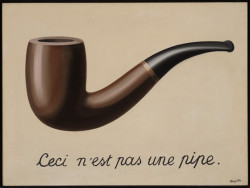
Everything originates from the self.
The human sensory organs gather information, which is then interpreted. Humans create an image of their environment. Their environment is their mirror and thus also an image of themselves. That is what remains: an image.
Socrates:
Our body, shall we say, has a soul?
Protagoras
Apparently we do.
Socrates But
where, dear Protarchos, would it have obtained it, if not from the whole body, which is animated, having the same as it, and even more excellent in every respect?
Definition of Human Being
Humans are multifaceted. Fortunately for us, what it means to be human is a question that can never be answered. What is necessary for the present work is to consider what constitutes a human being, what makes them unique: their thoughts, their feelings, their psyche, their mind, their consciousness, their soul. Underlying this is the organic, the body, the flesh, the organism. This separation only works until the brain is considered.
In the brain, body and mind, body and soul are intertwined.
Body and soul cannot be separated. However, the origin, the innermost part of the human being, remains in the organic.
Definition of space
Space can be described physically: three-dimensional: width, depth, height. Within it, matter and fields. Through the fourth, indispensable dimension, time, space becomes the location of physical processes. Science says that space and time are relative to each other.
The cultural space is at least etymologically related to physical space, which has also been mentioned here and should also be included as a symbol, as a way of looking at the work.
Humans and space are governed by laws. Whose laws should apply?
The attempt to connect people and space
Space is only perceived as such through human experience. There is no hierarchy. Both are mutually dependent. Humans cannot exist without space, and space cannot exist without humans.
They always exist side by side and yet are so different.
Humans, the living, the organic, the sensual, the animated, find themselves in space, the inanimate, the static, the physical, the cubic.
In this work, I want to break down this dualism of humans and space: the innermost essence of humans is transferred to space, and space, in turn, is perceived by humans. A cycle carried through time.
But just as the average of two lines, on one side of a point, suddenly reappears on the other side after passing through infinity, or the image of a concave mirror, after receding into infinity, suddenly reappears close in front of us: so too, when knowledge has passed through infinity, grace reappears; so that, at the same time, it appears in its purest form in the human constitution that has either no consciousness at all or an infinite consciousness.
Infinite Reflection
Grace exists only in no consciousness or in infinite consciousness, says Kleist. My bachelor thesis is an attempt to approach infinite consciousness.
Every day we encounter other people who, through what they say or simply through a gesture or a glance, are a mirror to us. The self passes through the other person. It is filtered, perceived, and interpreted by them. This in turn is expressed in language or gestures. The mirror in which we see ourselves is therefore clouded by interpretation.
In my work, there is only the person and the space, nothing else. The space serves as a mirror for the person. The space reflects the person's innermost being. That is the ideal I strive for.
The space should be as unformed as possible. Black is nothingness, emptiness; white is being, space. The boundaries of the space should be tangible matter. The space should reflect the beating of the heart 1:1.

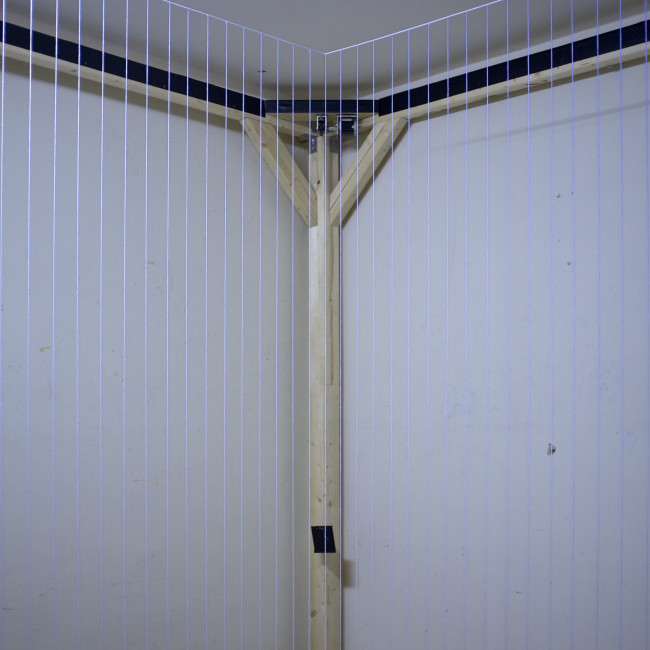
Room installation
The space is cubic and movable. The upper and lower edges of the space are defined by white rubber bands, the walls by white wool cords. The existing floor of the exhibition space serves as the floor. The ceiling remains open, black. The space is illuminated by UV light installed in the center of the ceiling.
The recipient's heartbeat is measured by a pulse monitor on the forearm. This image of the heartbeat is transmitted to an Arduino. This controls motors, which in turn set the rubber bands in motion in sync with the heartbeat. The space simulates the recipient's heart.
The recipient stands in a replica of her heart. She stands in her innermost being.

Room layout
The cubic frame is made of wood. The frame measures 4 × 4 × 3 meters. It is covered with molton and therefore not visible.
A motor is attached to each upper corner. Two fishing lines are attached to each motor via a spool.
One fishing line is connected to the upper rubber cord. The other fishing line leads downwards, is deflected by a pulley and is connected to the lower rubber cord. A counterweight is attached to the other ends of the fishing lines. This gives the rubber cords a basic tension.
White woolen cords are stretched between the two rubber cords at a distance of approximately three centimeters. The rubber cords and woolen cords create a 3 × 3 × 3 meter movable space.
On one side, the distances between the wool cords are greater. This marks the entrance/exit.
There is a UV lamp on the ceiling in the middle of the space. The ceiling is covered with molton. Only the rubber ropes and wool cords are visible due to the UV light.
Procedure
The recipient takes the heart rate monitor from the pedestal and places it on her forearm.
She enters the room.
After a few seconds, the heart rate monitor has detected the recipient's pulse/heartbeat. The room accepts the heartbeat.
The recipient can move around the room as they wish.
If the recipient leaves the room, presses the button on the heart rate monitor, or removes it, the movement of the room stops.

How it works
The heart rate monitor has two LEDs that shine on the wearer's skin. The reflection of the light changes depending on the blood flow and is measured by a sensor. This allows the pulse to be determined and, in turn, the heartbeat. The heart rate monitor sends the beats per minute (BPM) via Bluetooth as soon as it has determined them. It then sends every further pulse detected—if the wearer of the heart rate monitor moves a lot, the pulse may be more difficult to detect.
The BPM is received by a computer. Since it can be assumed that the wearer will move and therefore not every pulse can be determined and thus not sent, the BPM is simulated by a simple algorithm.
For each pulse (regardless of whether it is detected directly by the sensor or simulated), the computer transmits a signal to the Arduino. With each signal, the Arduino in turn sends 1,400 step signals to four stepper motor drivers within 200 milliseconds.
These in turn interpolate the step signals, control the current, and ensure that the four motors rotate approximately 130 degrees within 200 milliseconds. The motors are clearly audible during this process. The Arduino then ensures that there is no longer any voltage on the motors. Due to the mechanical tension of the rubber cables, the motors turn approximately 130 degrees in the opposite direction.
This process repeats until the recipient leaves the room, removes the heart rate monitor, or presses the button on the heart rate monitor.

Consideration of space, recipient, and technology
Space, the recipient, and technology. In the following, I would like to consider these three elements/media of my work.
Space
Space is meant to be a symbol for everything. A space that symbolizes the world we live in. Most people live in cities. These are characterized by their architecture. And even though most contemporary architects and the Gründerzeit movement are fighting against it, most buildings, streets, bus stops, and curbs remain cubic.
When people are not moving around in cities, they are moving around in digital spaces (Facebook, Snapchat, etc.). A cultural space that is also built on mathematical foundations. The digital platforms we use to communicate are based on logical operators.
Furthermore, as is currently evident from the political mood, people long for clarity, simple forms, and truths. (Daesh, Erdogan, AFD, Trump)
And that is why I chose a cube as the spatial form. Cubic, mathematical, and simple. The vertical wool cords are reminiscent of bars. However, they are arranged so close together that they can also be perceived as a surface. In addition, the apparent bars are soft and flexible.
With the first heartbeat, the space loses all its characteristics. The wool cords swing back and forth as the rubber ropes quickly tense and relax.
The space comes to life.
The recipient's heartbeat is its driving force.
The space loses its original characteristics and takes on the organic characteristics of a living being, the characteristics of the recipient.
When the recipient leaves the room, the wool cords continue to swing briefly, but quickly return to their original, orderly form. The room remains alive only as long as the person is in it.
The recipient
After the recipient enters the room, she finds herself in this very cubic, mathematical, simple world. The darkness and the tightly arranged vertical wool cords seem surreal, unreal; completely different from the familiar world. But it would be possible to escape from this world. The wool cords could theoretically be broken.
As soon as one begins to engage with them, the space begins to move. The swinging of the woolen strings causes the space to lose its previous form and thus also its original meaning.
The viewer looks at the image of her heartbeat. This image is drawn on the cubic, mathematical, simple form of the original space.
By looking at the image of her heart, the recipient looks into her innermost being, she looks into herself. Introspection.
The technique
The technology stands between the recipient and the room. The heartbeat is interpreted by the pulse sensor and transmitted to the room via radio waves, computers, electronic components, and motors. As a result, the resulting product is not an image of the heartbeat, but what remains of it after passing through the technology. It is therefore impossible for us to find ourselves in the room. The technological world does not help us to recognize ourselves.
What we can recognize is inevitably shaped, on the one hand, by the technology used and, on the other hand, by its design. In addition, the perception of the beating of the heart is also shaped by the sensory organs. Humans only perceive what they can perceive and not what is possible.
The idea that the recipient could recognize themselves through this installation should therefore be dispelled. Nevertheless.
What technology can do is show us a new, different perspective. And so it is with everything. Nothing can be a perfect mirror for us. The image we perceive of ourselves is always incomplete and distorted. But perhaps it is the sum of all the parts that allows us to recognize ourselves.
The alienation of one's own body through digital technology
People are increasingly defining themselves through likes, emoticons, and GIFs. What remains of their bodies is a two-dimensional image, shaped by the camera chip of their smartphone and framed by US capitalism.
Some people try to optimize their health with the help of fitness trackers through apparent self-observation. A company whose core interest is to make money has programmed an algorithm that tells us whether we should jog faster or slower.
In this digital world, our own bodies are no longer important. The more we shift our lives into the digital world, the more this world becomes an ever larger, more important mirror of humanity. This mirror is built from what humans have written, photographed, and filmed. But that is only a small part of us.
Unlike humans, algorithms have no idea what it's like to be human. Nevertheless, they influence us by suggesting what we should buy, which friends we should add to our "good friends" list, and which party we should like. Soon, algorithms fed by human exhalations will simulate humanity. But without bodies. Yet body and soul are inseparable.

People & Space and
tele-present water
David Bowen – 2011
This kinetic installation shows the movements of water. The data on water movement comes from a buoy in the Pacific Ocean.
By changing the space, David Bowen makes things visible that would otherwise remain hidden. The properties of the subject are interpreted and transformed into a new form using technology. He does not hide the technology. The technology is an active part of the object. Unfortunately, the water data is not transmitted in real time. Real time would intensify the experience of viewing the artwork.
It becomes clear that nature cannot be copied or represented 1:1. Only an image predetermined by technology can ever be created. It does not matter whether the technology is a brush, a computer, or an artificial neural network.

People & Space and
Body SPIN: Pulse Race
Time’s Up – 2003
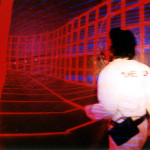
Body SPIN is a walk-in sphere with a diameter of three meters. Depending on the movements of the recipient, computer-generated images are projected into the sphere. Several programs can be played. In the Pulse Race program, the recipient also wears a heart rate monitor. In Pulse Race, the recipient must run to the finish line. However, the finish line moves further away with each heartbeat.
The recipient struggles with her exterior (running) against her interior (heartbeat). It becomes clear that the interior and exterior are mutually dependent. A duality. One struggles with one's body against one's body. Perception is mainly controlled by the visual. The goal is simulated.
In this work, the latest technological achievements are demonstrated in a performance show. Technologically, this was certainly impressive at the time. But this work is based on technology and not on people. The technical devices that the recipient has to carry with her and the technical projections outweigh the human aspect.

Man & Space and
White Bouncy Castle
William Forsythe, Dana Caspersen, and Joel Ryan – 1997
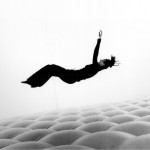
White Bouncy Castle is a 30-meter-long and 11-meter-high bouncy castle in the shape of a castle.
In their work, William Forsythe and Dana Caspersen not only make the dancers disappear, but also deform the dance floor. The visitors themselves become dancers, controlled by the uncontrollable peculiarities of the floor. The wobbly floor also forms a stark contrast to the classic dance floor, which serves to provide support for the dancer and enable her to perform precise movements. The beauty of a bouncy castle is that it gives people the opportunity to overcome gravity for a few brief moments. People are not at home in the air, which results in a loss of control that can in turn lead to absurd social situations.
The deformations of the floor/space are random, yet they originate from the movements of the visitors. Thus, the space also reflects the liveliness of the visitors. In contrast to my work, however, the expression of several people is replayed here, rather than the organic nature of an individual.

Documentation
I was struck by Oskar Schlemmer's quote, "Humans and space are governed by laws. Whose laws should apply?" I wondered how this problem would be approached today. How could I break this dualism? Since everything originates from humans, I wanted to create a space that accepts the laws of humans.
At first, I assumed that the most human aspect of humans was the brain. Brain waves can be measured using electroencephalography (EEG). There are reasonably affordable prosumer products available for this purpose, but they would have come with some limitations. The computer program associated with EEG requires a training program before it can venture to make statements about the emotional state of the user. The statements made by such EEGs are extremely vague and more appearance than reality. In addition, although there are certainly arguments to be made for the statement that the most human aspect of humans can be found in the brain, this is by no means absolute.
So I decided on the heart, which, due to its symbolism, perhaps represents human emotionality even more than vague brain waves. Ultimately, the heartbeat is also easier and clearer to measure.
Certainly influenced by the typical architectural images of the Bauhaus, the white, cubic space seemed to me to be the most spatial space.

Space is always a limitation for humans. Gravity, as part of space, prevents humans from jumping infinitely high. Architecture blocks our views and paths. That is why one idea was to adapt space/architecture directly to human needs. When humans move quickly, their hearts beat faster and they may need more space. The space could be enlarged.
An initial consideration was to construct the space entirely from wood. Machinery beneath the floor could enlarge and reduce the space. However, such a construction would have been extremely complex and costly. Therefore, it quickly became clear that such a realization is entirely utopian.

Room model 1
Flexible fabric could also form a space. Motors at the corners could enlarge and reduce the size of the space. Based on this idea, the first model was created in just a few hours using wire and tights.
This model shows that the fabric bulges in the middle. The space therefore loses its cubic shape.

Room model 2
Model wood, stretch fabric, eight drinking straws, fishing line; Arduino Uno, stepper motor (Sparkfun Electronics [ROB-10846]), stepper motor driver (SilentStepStick), computer, chest strap heart rate monitor (ICubeX BioVolt Sensor) connected to an Arduino Yún, battery for Arduino Yún.
The data from the heart rate monitor is sent to a computer via Wi-Fi using the Arduino Yún. The computer then forwards the data to the Arduino Uno, which controls the stepper motor driver.
It became clear that a great deal of force was required in a very short time. The stepper motor was only able to stretch the fabric a few centimeters. It was also apparent that the fabric itself oscillates. Applying the heart rate monitor is very cumbersome. The contacts of the heart rate monitor must be moistened with a gel. A bag containing the Arduino Yún and a battery must be carried over the shoulder. However, the advantage of a chest strap is that it can measure the heartbeat more accurately.
Room model 2 was exhibited during summaery 2015.
It was possible to see your heartbeat in the room model. However, you could only view the model from the outside. You were not part of the room. The logical consequence of this is to build a room that you can also walk into. The model showed that everything technical is possible.
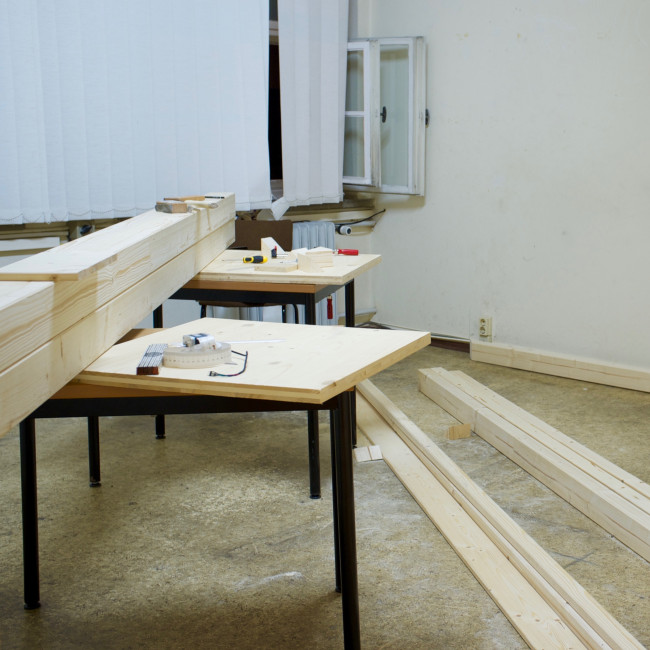
Construction of the room: wooden frame
I knew that I would have to experiment a lot. That's why I declared my workspace to be a future exhibition space from the outset. My workspace measures 420 × 480 × 300 cm. I planned the installation for this size with the help of sketches, a Blender model, and advice from carpenter Benjamin.
Materials
Vertical supports, wood (spruce): 280 × 10 × 10 cm (4 pieces)
Horizontal beams & struts, wood (spruce): 400 × 6 × 10 cm (6 pieces)
Triangular panels, plywood (spruce): 60 × 60 cm (2 pieces)
Angles 70 × 70 × 55 × 2.2 mm (12 pieces)
Screws (100 pieces)

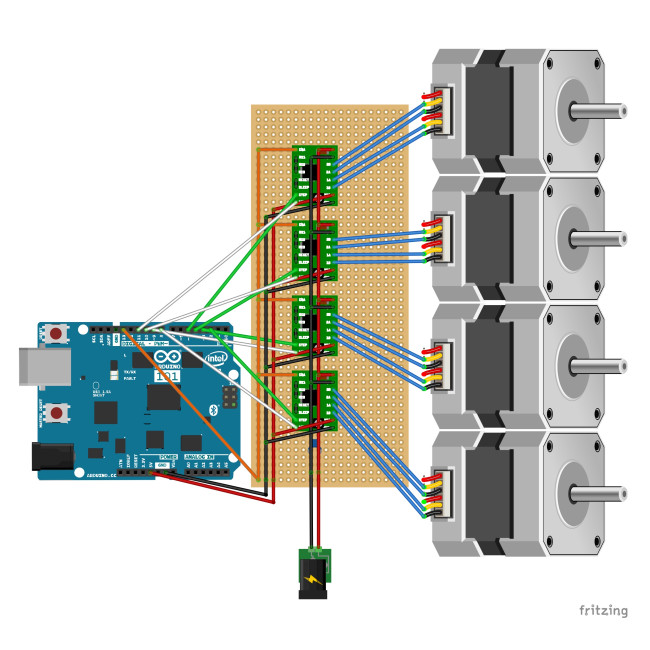
engine control
Material
4 stepper motors: Pololu Stepper Motor: Unipolar/Bipolar, 200 Steps/Rev, 57×76 mm, 4.5 V, 2 A/Phase
4 stepper motor drivers: Pololu A4988 Stepper Motor Driver, Black Edition
Capacitor: 63 V / 1000 µF
Power source 24 volts / 10 amps
Arduino 101
Case fan with upstream voltage converter
Printed circuit board, solder & jumper cables
Since I knew that very strong forces would be needed to move the room, I opted for stepper motors with a holding torque of 14 kg/cm. These motors require a correspondingly high amount of current (2 A/phase). That's why I chose stepper motor drivers that can withstand this current with appropriate cooling. For cooling, I use small heat sinks that sit on the motor drivers and an additional case fan that supplies the motor drivers with cold air. I chose the Arduino 101 to control the motor drivers. Compared to the Arduino Uno, it has a higher clock rate. This allows more signals per unit of time to be sent to the motor drivers. The power source supplies 10 amps, just enough to supply the four motors with 2 amps each. 24 volts ensure that the drivers are clocked quickly, allowing the motors to run as smoothly as possible.

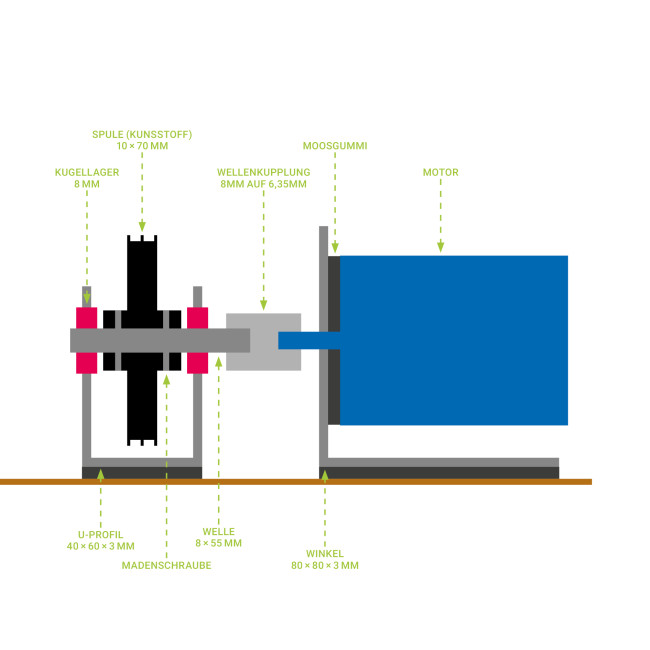
Motor suspension
A motor with a coil is attached to each upper corner of the room. Fishing line is wound around the coil several times. One end of the fishing line is attached to the rubber band of the room. A weight hangs from the other end.
As I discovered after an initial attempt, the vibration of the motor is transmitted very strongly to the wood. This results in a very loud vibration noise, which I found very disturbing. Therefore, I tried to minimize the vibrations as much as possible. The motor drivers interpolate the individual steps. This makes the motor run more smoothly and vibrate less. I optimized this in the first step, but the vibrations were still very strong and disturbing. So I used foam rubber to reduce the transmission of vibrations.
The coil is connected to the motor via a shaft coupling. The shaft is mounted in a ball bearing. The coil is connected to the shaft with grub screws.


Movable space
The original idea of designing the space out of stretch fabric presented various problems. A construction that would allow entry into the space would have been necessary: for example, a cable pull that would lift the fabric so that people could enter underneath it. In addition, the fabric would have to be extremely light, extremely stretchy, and would not be allowed to stretch out of shape. Only special theater fabric has these properties, but it is extremely expensive.
That's why I decided on a different solution: the side walls are not made of a continuous fabric, but of vertically arranged wool cords. The wool cords are knotted at the top and bottom to ten-meter-long rubber bands. The rubber bands are connected to the motor's spool with fishing line. A weight brings the rubber bands to a basic tension. In an initial attempt, the upper rubber band began to swing very strongly, but the lower one did not because it was resting on the floor. I then constructed a support for the upper rubber band out of tensioned fishing lines.
Lighting
The wooden structure and ceiling are covered with molton. The room is lit only by a UV lamp attached to the ceiling in the middle of the room. The wool cord and rubber band are specially designed for UV light, which is why only they are visible.
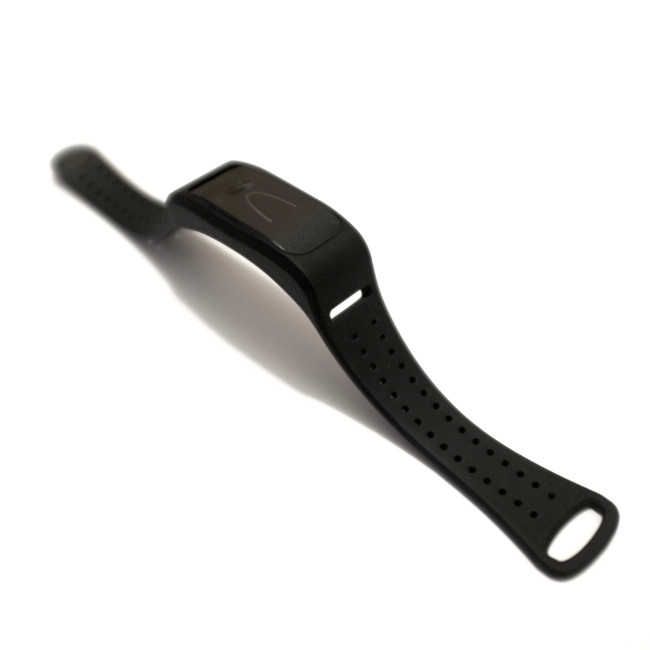
Heart rate monitor: Angel Sensor M1
Since a chest strap is relatively complicated to put on and I want to make installation as easy as possible, I chose a heart rate monitor that is worn on the wrist. There are numerous pulse sensors that are mainly aimed at amateur athletes. These are used in conjunction with a smartphone to measure heart rate and thus determine training progress. Most of the sensors use a standardized Bluetooth service. This transmits the pulse rate (BPM) to a receiver (usually a smartphone) at irregular intervals.
However, these devices are only partially suitable for my project in terms of their functionality. Fortunately, a Kickstarter campaign was launched in November 2015 for an open software pulse sensor called Angel Sensor M1. The Angel Sensor M1 has two LEDs that shine on and under the skin. The reflected light waves are measured by a sensor. Depending on how much and how fast blood flows under the LEDs, the light is reflected differently. This is used to calculate the pulse rate. My hope was to be able to evaluate the light wave data directly on a computer.
Since the wearer of the heart rate monitor is moving, this movement data would have to be included in the evaluation. This all happens directly on the heart rate monitor, but the algorithm for this is not public and too complex for my programming skills to design myself. Therefore, I can only receive the BPM calculated by the heart rate monitor. However, I was able to ensure that these values are sent as frequently as possible.

Software/Programming
A Node.js program establishes a serial connection with the Arduino and a Bluetooth connection with the pulse sensor.
There was no Node.js library for the Angel Sensor M1, so I wrote my own. This library takes into account almost all services and characteristics available for the M1. These include Optical Waveform Characteristic and Heart Rate Measurement Characteristic. Optical Waveform transmits the raw light wave data, which I was unable to use for the reasons mentioned above. Heart Rate Measurement transmits the beats per minute (BPM), and transmission takes place when the beats are reliably detected. Since not every beat is detected due to the wearer's movement, the program simulates the undetected beats.
All beats are transmitted to the Arduino via a serial connection.
The program on the Arduino ensures that when a serial signal is received, the stepper motor drivers are controlled in such a way that the motors rotate approximately 120 degrees within approximately 200 milliseconds. The four stepper motor drivers each have three input signals. One signal switches the motors on or off. Another signal controls the direction of the motor. The third signal gives the command for a step. The stepper motor drivers are set so that one step means 1/16 of a step of the motor. The motors have 200 steps per revolution.
I experimented to see how fast and how far I could turn the motors. If the rotation speed is too high, the motors do not move at all. If the motors turn too far, the tensile force of the rubber cables becomes too high: the motors cannot take steps and begin to stutter.
The result of the experiments: The Arduino controls the motor drivers with a total of 1100 steps. This means that the motor takes 68 steps or rotates 123 degrees. One step takes place approximately every 100 microseconds.
After the motor has turned, the motors are switched off until the next serial signal comes from the computer.
When the recipient presses the button on the heart rate monitor, the Bluetooth connection to the computer is interrupted. The Node.js program then sends no further signals to the Arduino. The room comes to a standstill again.

For reasons of better readability, the simultaneous use of masculine and feminine language forms has been avoided. All references to persons apply equally to all genders.
License
Unless otherwise indicated, all texts, graphics, and photos are licensed under a Creative Commons Attribution-NonCommercial-ShareAlike 4.0 International License.
Acknowledgements
Ben, Benjamin, Charlotte, Chris, Christian, Damaris, Eva, Greta, Hanna, Prof. Dr. Dr. Ekbert Hering, Julius, Luca, Mama, Maria, Martin Schied, Nele, Papa, Phillip, Robert & Ursula Damm.
References

The Treachery of Images (This Is Not a Pipe), René Magritte, Belgium, 1929. Los Angeles County Museum of Art

tele-present water, David Bowen
www.dwbowen.com/telepresentwater
Pulse Race, Times Up Linz, Robert Zauner (CC BY-NC)
flic.kr/p/67Cqcf
White Bouncy Castle, Julian Gabriel Richter
www.williamforsythe.de/installations.html?detail=1&uid=30
Declaration of honor
I hereby declare on my honor that I have completed this work independently.
Tübingen, May 13, 2016